Shared Outcomes 2026
Understanding and measuring change across SMMI-funded programmes

SHARED OUTCOMES HELP DIOCESES UNDERSTAND whether their programmes and initiatives are making a difference in people’s lives and in the life of churches.
They were developed from the experience of dioceses monitoring their programmes and are used, where relevant, across programmes funded by Strategic Mission and Ministry Investment (SMMI).
A simple way to understand change across our churches
Shared Outcomes give us a common set of things to look at when we want to understand change.
They help us:
- Measure change in people and churches
- Compare and share learning between programmes and initiatives
- Understand impact across the Diocesan Investment Programme (DIP) as a whole
- Use evidence to make decisions about what is working and where more support may be needed
In the graphic below, you will see some of the principal areas of change and impact that we measure. This page will take you through each of them and the tools designed to measure them.
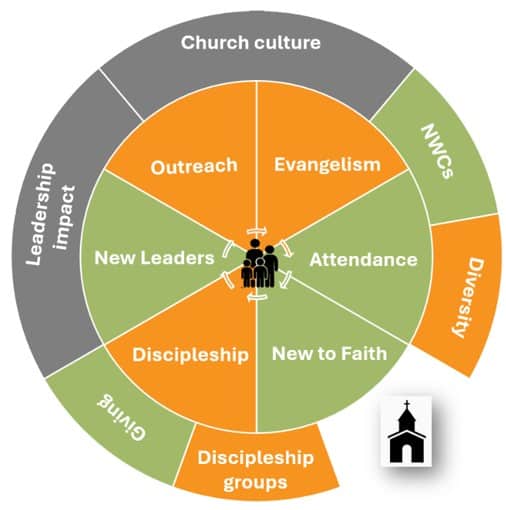
The graphic shows three types of measures:
- Green: Shared Outcomes such as giving, New Worshipping Communities, attendance, new leaders and people who are new to faith are collected using standardised tools and definitions.
- Amber: Shared Outcomes such as discipleship, outreach and evangelism, diversity, and discipleship groups can be measured using the optional tools and definitions provided.
- Grey: Some Shared Outcomes, such as leadership impact and church culture, are harder to capture using standard measures and require bespoke measures.
The key point is: You do not need to recreate the wheel! The Vision and Strategy team provide shared definitions and tools that you can use alongside your existing approaches.
What’s new in 2026?
In 2026, we have added:
- new monitoring tools
- clearer definitions
- examples of questions and approaches
- guidance to help dioceses use the Shared Outcomes locally
We are also developing a national data spine. This will make it easier to bring together data collected by dioceses and use it for analysis at a national level.
New tools in 2026
Participation Tracker – outreach and evangelism
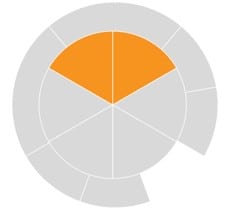
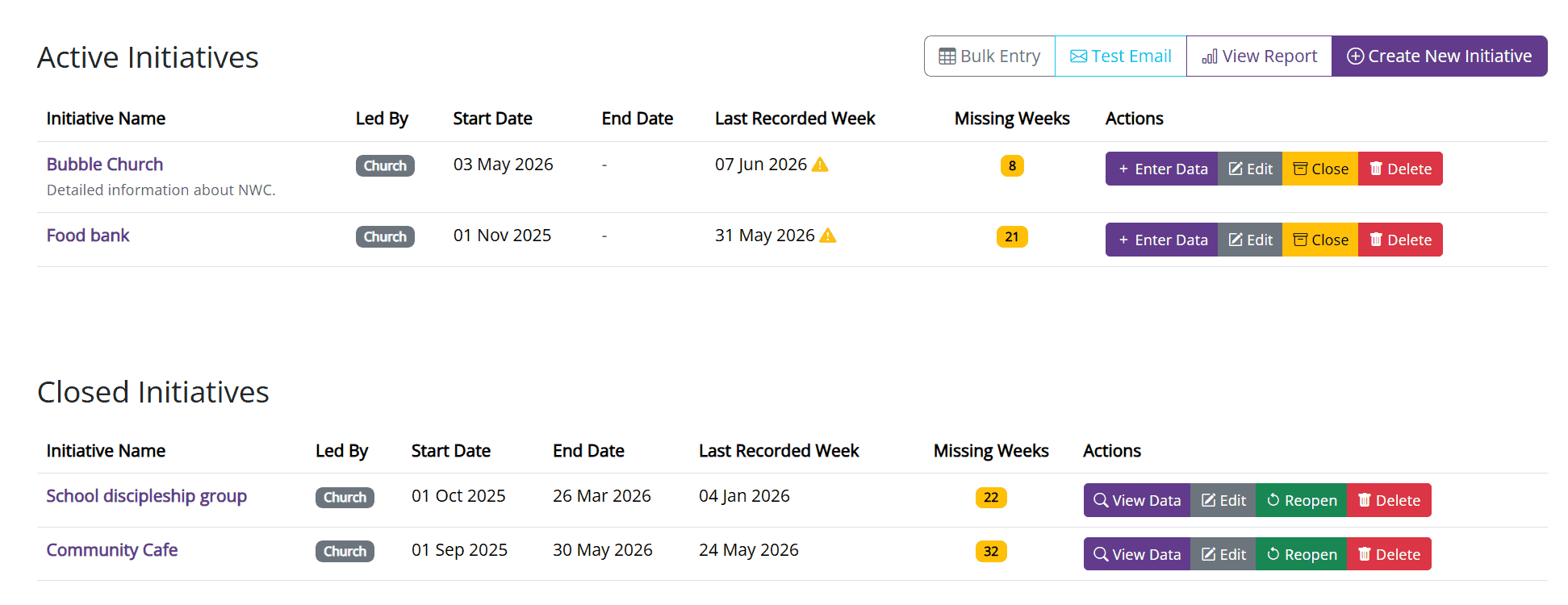
The Participation Tracker helps church leaders record participation in outreach and evangelism activities.
It has been created for dioceses and programmes where there has been significant investment in these areas.
The Participation Tracker is accessed through the Online Parish Records system. It is an optional tool, meaning that dioceses can track these areas using different tools.
This tool helps you measure:
| Scale of outreach | Number of people from the local community participating in engagement activities. All activities are combined into a single “participation” measure in this tool. |
| Scale of evangelism | Number of people participating in activities that present Jesus Christ and invite a personal response. All activities combined to a “participation” measure in this tool. |
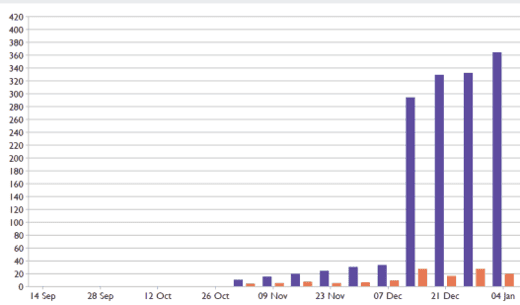
Church leaders and dioceses can view charts to see how these are changing over time.
Church Development Tool
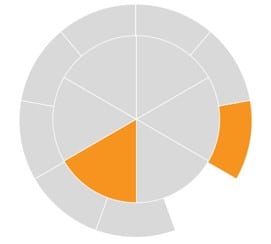
The Church Development Tool is a survey for congregations. It helps churches track developments in discipleship and diversity.
The Church Development Tool is accessed through the Online Parish Records. It is an optional tool – if your church already uses a suitable survey, you can continue to use that instead.
This tool helps you measure:
| Discipleship | Growth in individual discipleship |
| Diversity | Increased diversity (demographics) |
To help measure discipleship, the tool directs you through questions about:
- Prayer
- Small groups/bible studies
- Serving God
- Sharing questions
- Sharing faith
- New to/returning to church
Some resource churches already use similar surveys. Ideally, churches should not be asked to complete more than one congregation survey in a year.
Some churches have used Cornerstone Surveys to focus specifically on giving.
The Church Development Tool includes compatible questions, which can help track change from when a Cornerstone Survey was previously used.
New leaders and discipleship groups
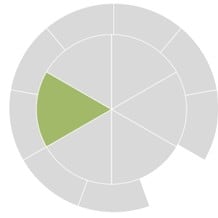
Dioceses can measure the number of new leaders and discipleship groups using their existing local systems, such as spreadsheets or Teams forms.
These measures focus on:
| Discipleship groups | Number of church members attending discipleship groups |
| New leaders | Number of people who have newly passed a leadership threshold |
New leaders
An example spreadsheet for tracking new leaders is available here.
SMMI-funded programmes may want to track particular types of leaders, depending on the focus of the programme.
For example:
- ordained and lay leaders
- young leaders
- CYP leaders
- leaders from Global Majority Heritage communities
- leaders from estate contexts
Discipleship groups
Church leaders can report the number of people attending discipleship groups, either quarterly or annually, depending on the needs of the programme or diocese.
You can use your existing local system, such as a spreadsheet or Teams form.
Standardised tools
Statistics for Mission – New worshipping communities, attendance, new to faith
Some Shared Outcomes use existing national data collections and are recorded through Statistics for Mission.
The following Shared Outcomes are recorded through Statistics for Mission:
| New worshipping communities | Number of people from the local community attending engagement activities. All activities combined to a “participation” total. |
| Attendance | Number of people taking part in an activity that presents Jesus Christ with an invitation to respond personally. All activities combined to a “participation” total. |
| New to faith | Number of baptisms of >11s, confirmations and first-time public confessions of faith. Number of baptisms of children 0–11 years. |
Some dioceses also ask well-resourced churches to provide this information more frequently (for example, quarterly) using a local spreadsheet or Teams form.
This can be useful when programmes need more regular information than the annual national return provides.
Online parish finances – Giving
Giving is standardised through Parish Financial Returns, with an additional tool to help dioceses consistently calculate annual financial support or investment between churches.
Giving information is recorded through Online Parish Finances / Parish Financial Returns.
Calculating annual support or investment
We have provided a form to help dioceses calculate annual support or investment consistently, which is available here.
This can help you identify whether churches are:
- receiving financial support, or
- contributing financially to investment in other churches.
As with other measures, some dioceses ask well-resourced churches to provide giving information quarterly using a local spreadsheet or Teams form.
Bespoke tools for each diocese
Not all important changes can be captured easily through standard measures. The Vision and Strategy team can work with dioceses to develop an approach that fits the change you are trying to understand.
Here are some example outcomes and approaches you may wish to explore.
Leadership and church culture
You may, for example, be interested in understanding more about the following outcomes:
| Leadership impact and resilience | Progress in leadership impact and resilience in line with diocesan priorities. |
| Church culture | Development in line with diocesan priorities. |
Talk to the Vision and Strategy team for examples of questions and approaches that can help you track change in these areas.
Most significant change
Stories can help us understand changes that numbers alone cannot show.
Most Significant Change is a structured approach for collecting and exploring stories about important experiences within a community.
Dioceses can use this approach to identify stories that help explain the Shared Outcomes in more depth.
Talk to the Vision and Strategy team if you would like support using Most Significant Change in your programme.
Asking the right questions
Programmes and interventions need to think about the questions they want to answer through their learning. This helps ensure they collect the right statistics and perspectives to explore these questions in an evidence-based way.
You can gather evidence in lots of ways, including:
- surveys
- interviews
- supervision sessions
- learning days
- communities of practice
- group discussions
The aim is to bring together statistics and people’s perspectives so that evidence can inform learning and decision-making at every level.
Using the outcomes for shared learning
Evaluation reports, shared on the Church Support Hub, will gradually start to reflect the Shared Outcomes.
Research has started to explore some of the outcomes across multiple programmes.
This can support dioceses to reflect on their own programmes and set outcomes.
As the national picture develops, this will be supported by the growing list of parishes receiving SMMI funding.
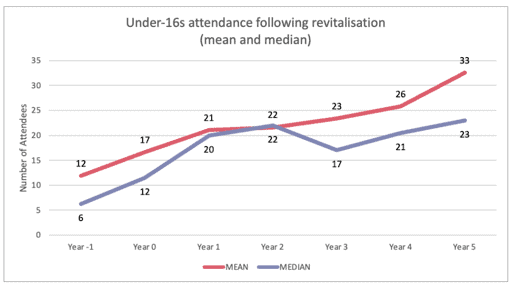
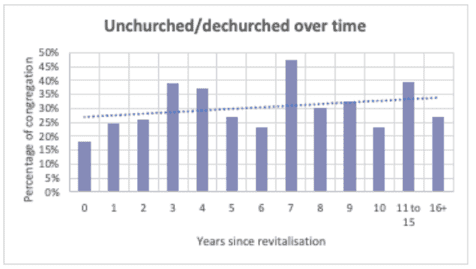
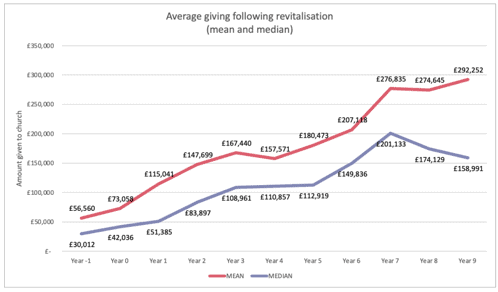
For example, the charts below show changes over time in church plants and grants across the UK.