
Beach labyrinths
Bringing labyrinths to Devon’s beaches, inviting spiritual encounters and community connection
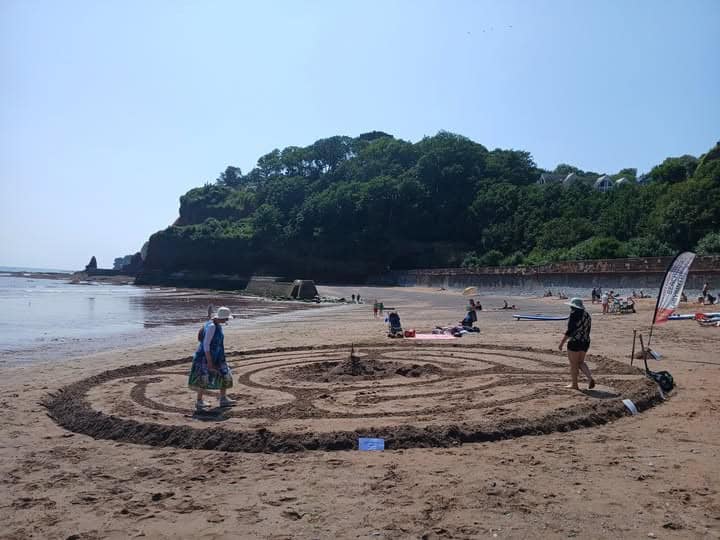

CHRISTIAN LABYRINTHS HAVE BEEN FOUND inside churches and cathedrals since around the year 1000, but the Devon Beach Labyrinth Project has been trying something new: taking labyrinths to beaches across Devon.
The aim of the labyrinths is to reach people who wouldn’t normally consider entering a church. They also bring people together ‘where spiritual encounters can take place in a public space’, says coordinator Andrew Nicholson.
With an average of 70 people visiting each of the fifteen labyrinths, the project has seen over a thousand visitors over the past three years. The project has been funded by the Posbury St Francis Trust and the Diocese of Exeter.
How it works
Andrew starts by drawing a circle in the sand. With the help of volunteers, often from local churches and communities, the sand is dug up and raked into place. This can take a couple of hours to complete, and then the labyrinth stays open until the tide comes in. Despite the limited window, an average of 70 people visit each labyrinth.
When the labyrinth is complete, Andrew and his volunteers place a driftwood cross in the centre. They say a prayer and dedicate the space for anyone who is passing by, then open it for the public to use. There is often a queue by this point!
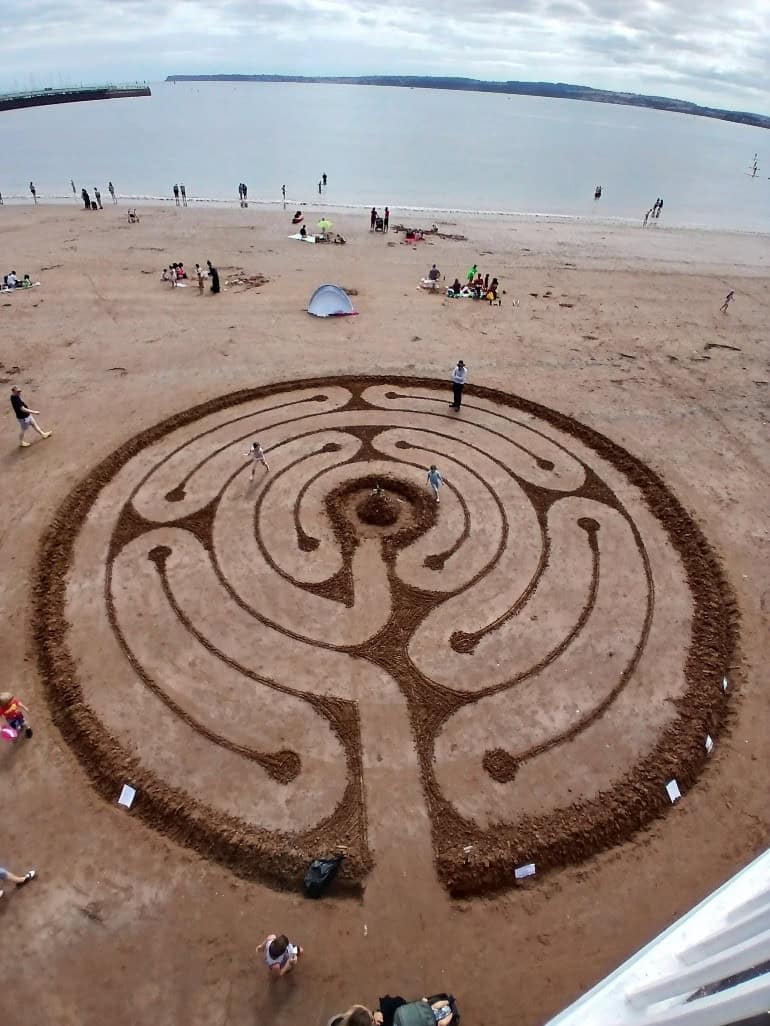
Unlike a maze, a labyrinth has just one path to the centre. Those walking the labyrinth are invited to choose an object (often a stone or a piece of rubbish from the beach) to symbolise their problems and worries. As they journey around the labyrinth, visitors are invited to reflect on how they are feeling. When they reach the centre, they can leave the object – and their worries – at the cross.
Visits to the labyrinth come to an end as the tide comes in and the labyrinth begins to wash away.
Reflections from visitors
The labyrinths get lots of positive feedback, including regular comments such as, ‘Thank you, that meant a lot to me’ and ‘What a lovely idea, I loved that’.
Lots of families visit the labyrinths. One dad said to his young daughter,
‘Daddy’s got a big stone ‘cause he’s got lots of worries. Let’s go and leave them all in the middle.’
Another mum said to her child, ‘We like saying a little prayer, don’t we?’ and a family doing it together said, ‘Everyone should have the chance to experience something like this.’
Other participants had lost family members. On one occasion, the last person to walk it said, ‘That was brilliant mate, my mum would have loved this. She passed away about a month ago.’
For Andrew, one of the highlights was seeing a mother and daughter walk a labyrinth together.
‘Just before they finished, the daughter held out her hand and they finished it holding hands together,’ he says. ‘The mum could hardly speak at the end and had tears in her eyes. Words weren’t necessary – it was obviously a moving experience for them.’
A commenter on Facebook noted that it was ‘amazing to walk it and even more amazing to see so many people of all ages walking and praying too’.
Others said that it is ‘always good to leave it at the cross’ and suggested that ‘children in schools would really benefit from this’. Still others noted that ‘we’re not normally encouraged to reflect’.
How you can start a labyrinth
1. Find a location
Although the Devon Beach Labyrinth Project is (as the name suggests!) beach-based, labyrinths can take place in lots of different places. This will depend on the spaces available to individual churches. Temporary labyrinths could be laid out in a churchyard or on a village green using long pieces of rope, or on a large pavement using chalk. A longer-term labyrinth could be created by planting flowers in a labyrinth pattern or by using temporary grass paint, which can last for weeks.
The beach labyrinths aim to bring a spiritual experience to people who wouldn’t normally visit a church. With this in mind, it can be helpful to host the labyrinth where people can find it without planning to visit in advance.
2. Coordinate volunteers
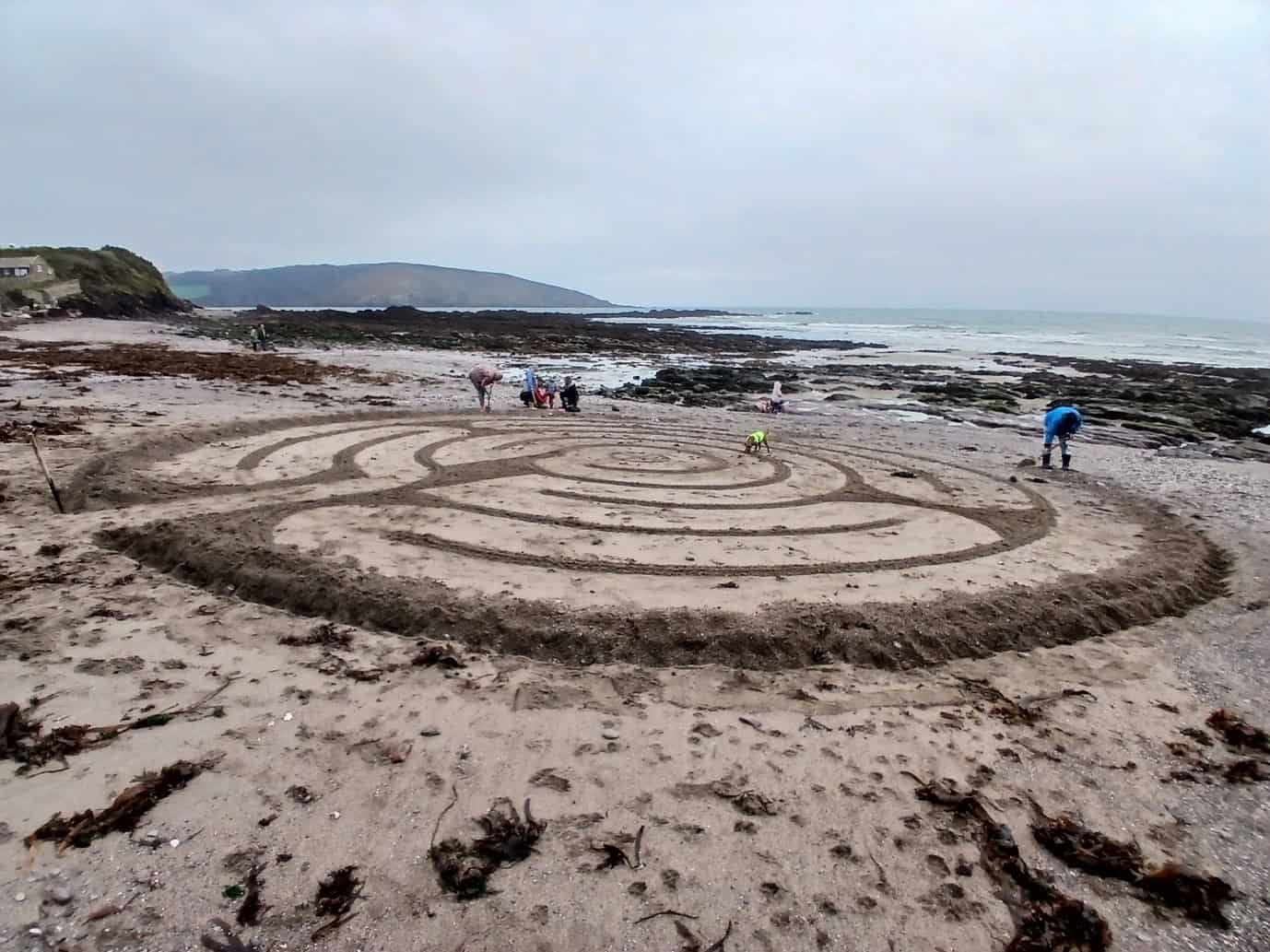
Volunteers are particularly helpful when planning a beach labyrinth, because there is a short window to build and use a labyrinth before the tide comes in. The Devon Beach Labyrinth Project worked with the Diocese of Exeter to find churches who would be interested in participating.
Some churches sent volunteers to help build the labyrinths, while others brought food to share. Still others came as a group to undertake a public spiritual experience.
At a minimum, you will need someone to organise where and how the labyrinth will be run, a small team to run the labyrinth on the day, and someone to share details of the labyrinth with people in your local area.
3. Share details of the labyrinth
Here are some places to consider sharing details of the labyrinth:
- Community Facebook page
- Local schools, universities, or other institutions
- Via flyers in the local area
- With your local diocese, who might be able to include details in their weekly/monthly mailing.
- The beach labyrinths have a Facebook page. Andrew, the coordinator, shares a report and photos with the 600 followers after each labyrinth. There are also flyers, an example of which can be found below:
4. Lay out the labyrinth
Labyrinths are different to mazes – they only have one path to the centre, and they provide an opportunity for reflection. There are different labyrinth patterns available online, but the advice when starting out is to keep to a simple pattern. They don’t need to be complicated to be effective. Typically there are three base designs, but you can also get creative.
Depending on your experience with labyrinths, it may be advisable to have a practice run.
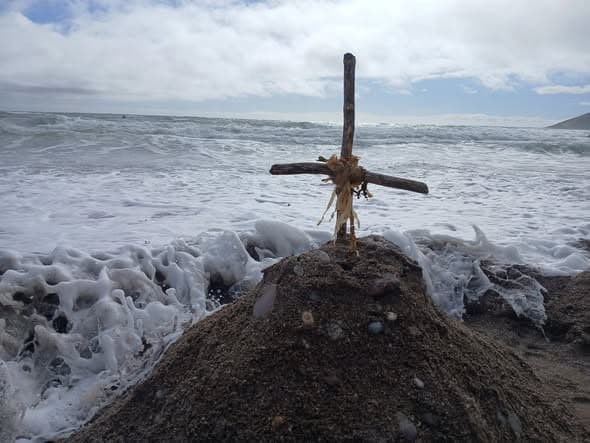
The beach labyrinths use physical objects such as beach rubbish or stones to represent visitors’ prayers, cares and worries. There is also a cross at the centre of the labyrinth. Visitors carry the object through the labyrinth and leave it at the cross when they reach the middle – a physical representation of leaving those prayers, cares and worries with God.
5. Consider informal worship
The final beach labyrinth of the season ended with an informal service on the beach. Someone brought a keyboard so that there were songs, along with readings and time for reflection.
This isn’t essential, but it can be a great way to engage with people who are searching for God but wouldn’t yet be comfortable attending a service in a church.
Find out more about the beach labyrinths on their Facebook page